
Security deposits and damage claims for Nigerian shortlet hosts
Clavibase
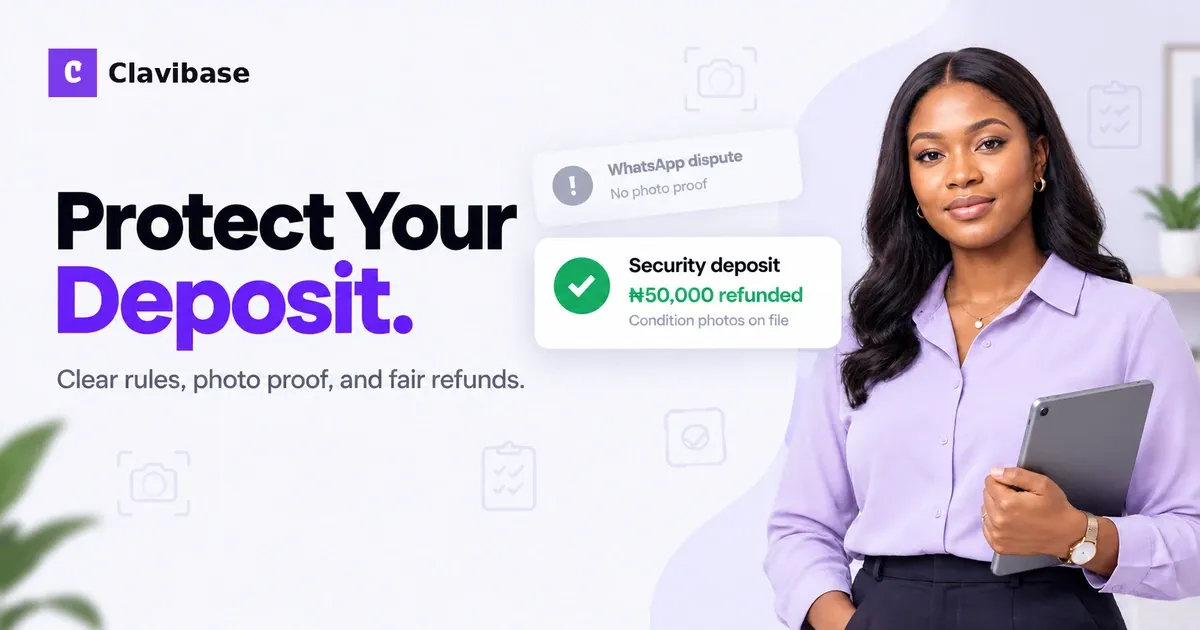
The guest checked out at noon. The living room sofa has a new stain. The microwave plate is cracked. Their security deposit is still in your account, and now WhatsApp is full of “I did not do that” and “refund my money today.”
This is one of the most stressful moments in Nigerian shortlet operations. Deposits are meant to protect you. Without clear rules, photos, and a payment trail, they become arguments.
This guide is practical operations advice for hosts, not legal advice. For disputes that escalate, speak with a qualified Nigerian professional who understands your situation.
Why deposits go wrong so often
Most deposit fights are not about one broken glass. They start earlier, when the booking was still a chat.
Common weak spots:
- A deposit amount promised on WhatsApp that never appears in a confirmation
- No dated photos or video of the apartment before check-in
- House rules that live only in your head (“no parties” without saying what that means)
- Cash or personal bank transfers with no booking reference
- Guests who never acknowledged the inventory or condition of the place
When something goes wrong later, both of you are arguing from memory. Memory is a terrible system of record.
How much to charge, and when to take it
There is no single correct deposit for every shortlet. Your amount should reflect the risk of the stay and what you can actually defend with evidence.
Practical patterns hosts use:
- A booking deposit to hold dates (often part of the rent, not the damage cover)
- A separate security or caution deposit for damage, missing items, and extra cleaning
- Full payment before arrival for short stays, weekends, or peak festive dates
- A balance due before check-in when the guest paid only a holding amount
Keep the policy short and written. State:
- How much is due to confirm
- Whether any amount is a refundable security deposit
- When the balance is due
- When you aim to refund the deposit after checkout
- What kinds of costs can be deducted (damage, missing inventory, deep cleaning beyond normal turnover)
Prefer checkout or verified payment over “I will transfer now” screenshots. A clear payment record protects both of you if someone later claims they never paid a deposit.
Before the stay: set the paper trail
Your strongest position is built before the guest arrives.
Write rules guests can actually follow
Vague rules create vague disputes. Be specific about parties, overnight visitors, smoking, noise after a certain time, cooking oil, and moving furniture. Send the same rules in the confirmation, not only in a long Instagram caption.
Document condition on the way in
Before or at check-in, capture dated photos or a short walkthrough video of:
- Sofas, mattresses, and rugs
- Kitchen appliances and glassware
- Bathroom fittings and mirrors
- TV, decoder, and remote controls
- Walls, doors, and floors that already have marks
Store the files with the booking dates in the filename. If a cleaner or co-host does turnovers, give them the same checklist every time.
Get acknowledgement, not just a “noted”
Ask the guest to confirm they received the house rules and that the apartment matches the listing. A short WhatsApp reply or a checkbox on a booking form is better than silence. You are not trying to sound legalistic. You are creating a shared starting point.
Example message:
Hi, please confirm you have received the house rules and check-in notes for 26-28 Sep. On arrival, kindly send a quick video walkthrough of the living room, kitchen, and bedrooms so we both have a record of the condition. Deposit refund is processed after checkout once the inspection is complete.
During the stay: document without hovering
You do not need to police every hour. You do need a calm response when something is reported.
If a guest messages that something broke, ask for a photo immediately and note the time. If you send a plumber, electrician, or cleaner mid-stay, keep the receipt and the chat. Those details matter more than a dramatic voice note after checkout.
For longer stays, a mid-stay check (with notice, where appropriate) can catch issues while they are still small. For short weekend stays, a solid in/out record is usually enough.
After checkout: a fair claims process
Speed and evidence beat emotion.
A workable sequence:
- Inspect against your pre-stay photos or video within a clear window you already stated (many hosts aim for the same day or next working day).
- Separate normal wear from actual damage. A used sponge is not a claim. A burn mark on a marble countertop might be.
- List each deduction with a photo, a short description, and a reasonable cost (repair, replacement, or specialist cleaning).
- Message the guest once with the full picture, not in five angry fragments.
- Refund the unused deposit promptly when there is nothing to claim, or refund the balance after deductions.
If you cannot prove the damage happened during their stay, do not invent certainty. Holding a deposit without evidence damages your reputation faster than writing off a cheap item.
Example claims message:
Hi, thank you for staying with us. After inspection we found a cracked microwave plate and oil stains on the living room rug that were not present at check-in (photos attached, with the pre-stay reference). Deduction: ₦18,000 for the plate and professional rug cleaning. We will refund the remaining ₦32,000 of your security deposit today. Please confirm your account details if they have changed.
Keep one trail for bookings, messages, and money
Deposit disputes get worse when the booking lives in Instagram, the payment lives in a personal bank alert, the house rules live in a broadcast list, and the photos live in three phone galleries.
Pull the essentials into one place where you can later find:
- The confirmed dates and guest details
- What was paid, when, and for what (rent versus security deposit)
- The rules and check-in notes you sent
- Condition photos tied to that stay
Clavibase helps you keep the booking, guest messages, and payment verification together, so if a deposit question comes up you are not reconstructing the story from scattered chats. You can also set a refundable caution fee on each listing. After checkout you can release it or claim for damages, and if you take no action the full deposit is refunded to the guest automatically within 48 hours. Start free with Clavibase
Bottom line
A security deposit only works when guests know the rules, both of you have proof of condition, and refunds or deductions follow a clear process. Write the policy once, document every stay, and refund quickly when nothing is wrong. That combination protects your apartment without turning every checkout into a fight.